ASGI 是异步服务器网关接口(Asynchronous Server Gateway Interface)的缩写,是 WSGI 的异步进化版本,专为现代 Python 异步 Web 框架设计。
基本概念 #
1. ASGI 是什么 #
ASGI 是一个介于 Python Web 应用和服务器之间的标准接口,类似于 WSGI,但支持异步操作。它允许:
- 异步请求处理
- 长连接(如 WebSockets)
- 协议无关(HTTP/1.1, HTTP/2, WebSocket 等)
2. ASGI 与 WSGI 对比 #
| 特性 | WSGI | ASGI |
|---|---|---|
| 设计时代 | 2003 (同步时代) | 2016 (异步时代) |
| 并发模型 | 同步 | 异步 |
| 协议支持 | HTTP 请求/响应 | HTTP/WebSocket/其他协议 |
| 长连接 | 不支持 | 支持 |
| 性能 | 一般 | 更高 |
| 框架示例 | Flask, Django | FastAPI, Starlette |
ASGI 规范 #
1. 应用接口 #
# 定义一个最简单的 ASGI 应用
# scope: 包含请求信息的字典
# receive: 接收消息的异步函数
# send: 发送消息的异步函数
async def app(scope, receive, send):
    """
    scope: 包含请求信息的字典
    receive: 接收消息的异步函数
    send: 发送消息的异步函数
    """
    # 这里只是一个接口定义示例,实际运行需要补充完整的 send 逻辑
    pass
2. 消息流 #
- 连接阶段:服务器创建连接,发送初始信息
- 交互阶段:应用和服务器通过
receive/send交换消息 - 断开阶段:连接关闭
3. 消息类型 #
HTTP 请求示例 #
# 下面是 ASGI HTTP 消息的结构示例,不是可运行代码
# 实际开发中应通过 send/receive 进行消息交互
# 接收到的消息
http_request = {
    "type": "http.request",
    "body": b"request body data",
    "more_body": False
}

# 发送的消息
http_response_start = {
    "type": "http.response.start",
    "status": 200,
    "headers": [(b"content-type", b"text/plain")]
}
http_response_body = {
    "type": "http.response.body",
    "body": b"response body data",
    "more_body": False
}
WebSocket 示例 #
# 下面是 ASGI WebSocket 消息的结构示例,不是可运行代码
# 实际开发中应通过 send/receive 进行消息交互
# 接收到的消息
websocket_connect = {"type": "websocket.connect"}
websocket_receive = {"type": "websocket.receive", "text": "Hello world!"}

# 发送的消息
websocket_accept = {"type": "websocket.accept"}
websocket_send = {"type": "websocket.send", "text": "Message received"}
ASGI 生态系统 #
1. 服务器实现 #
- Uvicorn:最快的 ASGI 服务器之一(基于 uvloop)
- Daphne:Django 官方推荐的 ASGI 服务器
- Hypercorn:支持 HTTP/2 的 ASGI 服务器
- uvloop:ASGI 服务器的高性能事件循环实现
2. 框架支持 #
- FastAPI:现代高性能 API 框架
- Starlette:轻量级 ASGI 框架(FastAPI 的基础)
- Django Channels:为 Django 添加 ASGI 支持
- Quart:类似 Flask 的异步框架
3. 中间件 #
# 定义 ASGI 中间件的写法
# app: 被包装的 ASGI 应用
async def middleware(app):
    # 返回一个新的 ASGI 应用
    async def wrapped_app(scope, receive, send):
        # 预处理逻辑可以放在这里
        # 调用原始应用
        await app(scope, receive, send)
        # 后处理逻辑可以放在这里
    return wrapped_app
常见中间件:
- 认证
- CORS
- GZip 压缩
- 请求/响应修改
ASGI 工作原理 #
1. 请求生命周期 #
- 客户端发起请求
- ASGI 服务器接收并解析请求
- 服务器创建
scope字典并调用应用 - 应用通过
receive获取请求体 - 应用通过
send发送响应 - 服务器将响应发送给客户端
2. 异步处理流程 #
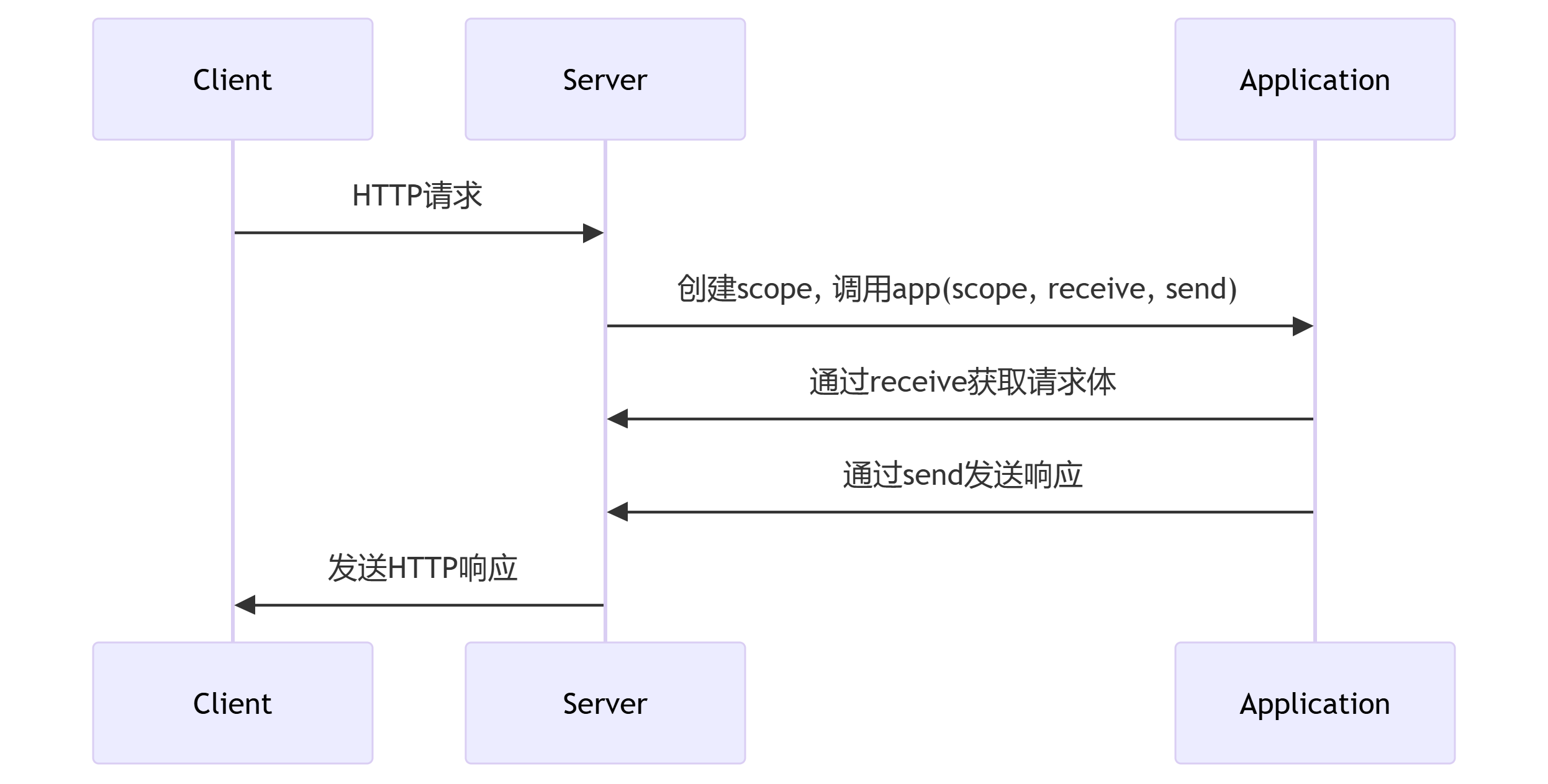
sequenceDiagram
participant Client
participant Server
participant Application
Client->>Server: HTTP请求
Server->>Application: 创建scope, 调用app(scope, receive, send)
Application->>Server: 通过receive获取请求体
Application->>Server: 通过send发送响应
Server->>Client: 发送HTTP响应
开发 ASGI 应用 #
1. 简单示例 #
# 一个最简单的 ASGI HTTP 应用,返回 Hello, world!
async def app(scope, receive, send):
    # 确认请求类型为 http
    assert scope['type'] == 'http'
    # 发送响应头
    await send({
        'type': 'http.response.start',
        'status': 200,
        'headers': [
            [b'content-type', b'text/plain'],
        ]
    })
    # 发送响应体
    await send({
        'type': 'http.response.body',
        'body': b'Hello, world!',
    })
2. 使用 Starlette 框架 #
# 导入 Starlette 应用和响应类型
from starlette.applications import Starlette
from starlette.responses import PlainTextResponse

# 创建 Starlette 应用实例
app = Starlette()

# 定义路由和异步视图函数
@app.route('/')
async def homepage(request):
    # 返回纯文本响应
    return PlainTextResponse('Hello, world!')
生产部署 #
1. 服务器选择 #
- 独立运行:Uvicorn 适合轻量级部署
- 多进程:Gunicorn + Uvicorn Worker 适合生产环境
- 容器化:Docker + Uvicorn 适合云部署
2. 性能优化 #
- 调整工作进程数(通常 CPU 核心数 × 2 + 1)
- 使用 uvloop 事件循环
- 启用 keep-alive
- 使用中间件进行缓存
常见问题 #
1. 同步代码阻塞 #
# 错误示例:同步代码会阻塞事件循环
def sync_function():
    # 阻塞操作
    import time
    time.sleep(1)

# 正确示例:使用异步替代
import asyncio
async def async_function():
    # 非阻塞操作
    await asyncio.sleep(1)
2. 数据库连接 #
# 导入 FastAPI 和异步数据库库
from fastapi import FastAPI
from databases import Database

# 创建 FastAPI 应用实例
app = FastAPI()
# 创建异步数据库对象
# 请将数据库连接字符串替换为实际可用的数据库
database = Database("postgresql://user:password@localhost/db")

# 应用启动时连接数据库
@app.on_event("startup")
async def startup():
    await database.connect()
总结 #
ASGI 代表了 Python Web 开发的未来方向:
- 原生支持异步/等待语法
- 更好的性能表现
- 更灵活的协议支持
- 适合现代 Web 应用需求(如实时通信)
随着 FastAPI、Starlette 等框架的流行,ASGI 正在成为 Python Web 开发的新标准。